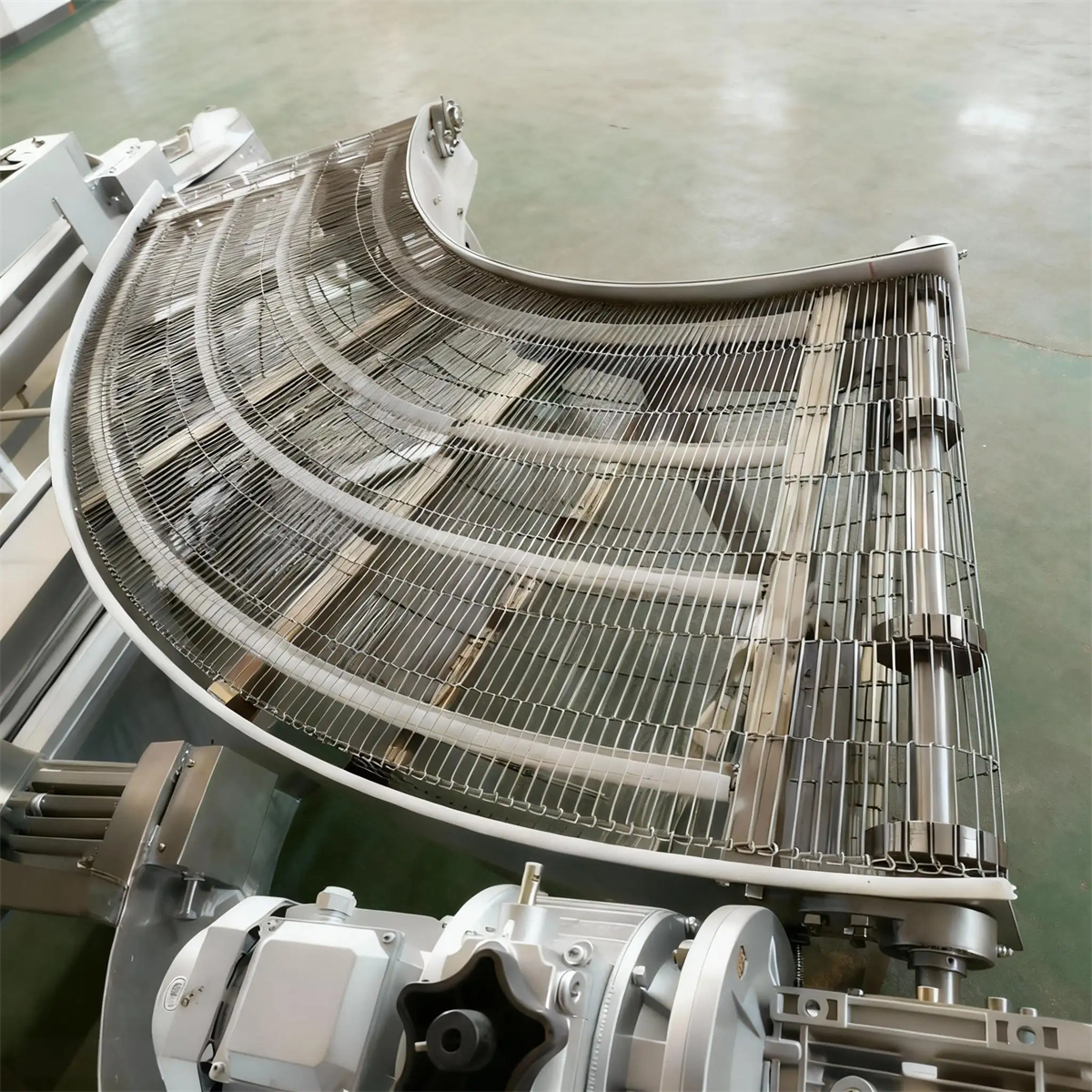
If you manage a food processing facility—whether it’s poultry in Queensland, seafood in Latvia, or bakery in Spain—you face the same nagging question every time a conveyor belt needs replacement:
“Will this belt help me pass the next food safety audit? Or will it become another headache I have to explain to management?”
Production managers like Sarah (whom we met earlier) don’t just need a belt that moves product. They need a belt that survives daily chemical washdowns, resists bacterial growth, and doesn’t fail when the auditor arrives.
This guide answers that need—with practical, technical advice drawn from real-world food processing applications across Europe and Australia.
Why “Easy to Clean” Matters More Than You Think
Here’s what keeps food production managers awake at night:
1. A single failed audit can halt production for days
2. Bacterial harborage points in conveyor belts lead to product recalls
3. Corrosion failures cause unplanned downtime
The right conveyor belt addresses all three. But finding it requires looking beyond the spec sheet.
The Four Pillars of a Food-Grade Conveyor Belt
Based on feedback from food processors in Spain, Latvia, and Australia, these are the non-negotiable factors that determine whether a belt will perform—or fail—in real-world conditions.
Pillar 1: Material Science—Why 304 Isn’t Always Enough
Most buyers start and end with “stainless steel.” But here’s what experienced production managers know: not all stainless steel handles food processing environments equally.
| Material | Best For |
|
|
| 304 Stainless Steel | Bakery ovens, freezing tunnels, dry goods, general packaging | Pitting corrosion in high-chloride environments (brine, seafood) | |
| 316L Stainless Steel | Seafood processing, meat brine solutions, pickle lines, high-humidity wash-down areas | Higher cost (30-40% more)—but essential where salt is present | |
| PTFE-Coated Stainless | Dough handling, candy production, high-fat content products | Coating can wear over time—requires periodic inspection |
The insight that matters: If your process involves salt—common in meat, seafood, and cheese—316L isn’t optional; it’s insurance. The molybdenum content in 316L provides defense against pitting corrosion that 304 simply cannot offer.
Pillar 2: Geometry—The Hidden Bacteria Trap
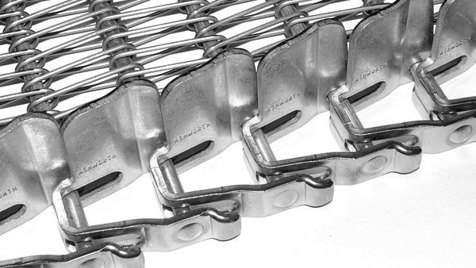
A Spanish bakery equipment manufacturer recently discovered why their customer kept failing audits: the conveyor belt’s hinge design created tiny crevices where dough residue accumulated.
The fix wasn’t more cleaning—it was better belt design.
What to look for:
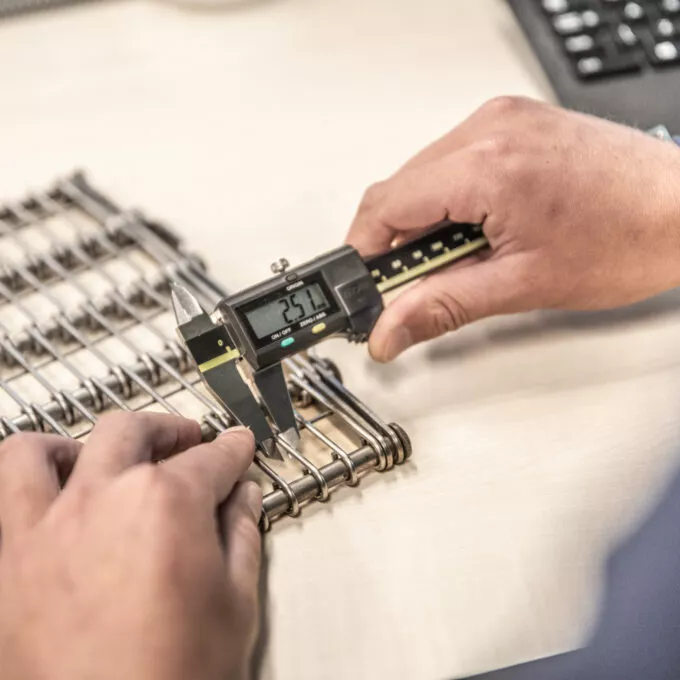
1.Surface finish: Ra ≤ 0.8 μm (the hygienic gold standard). Bacteria struggles to cling to smooth surfaces.
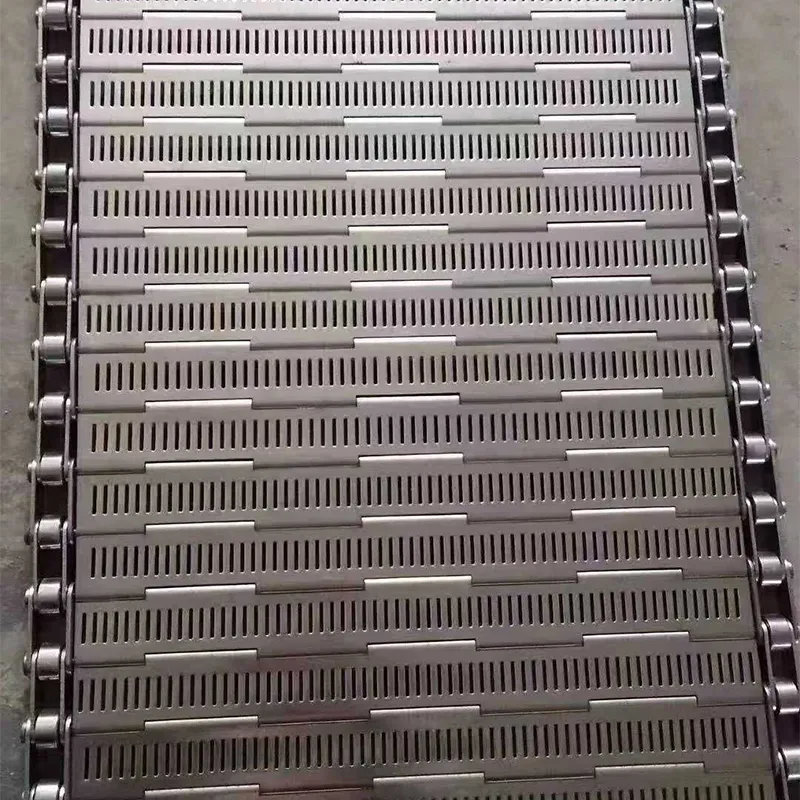
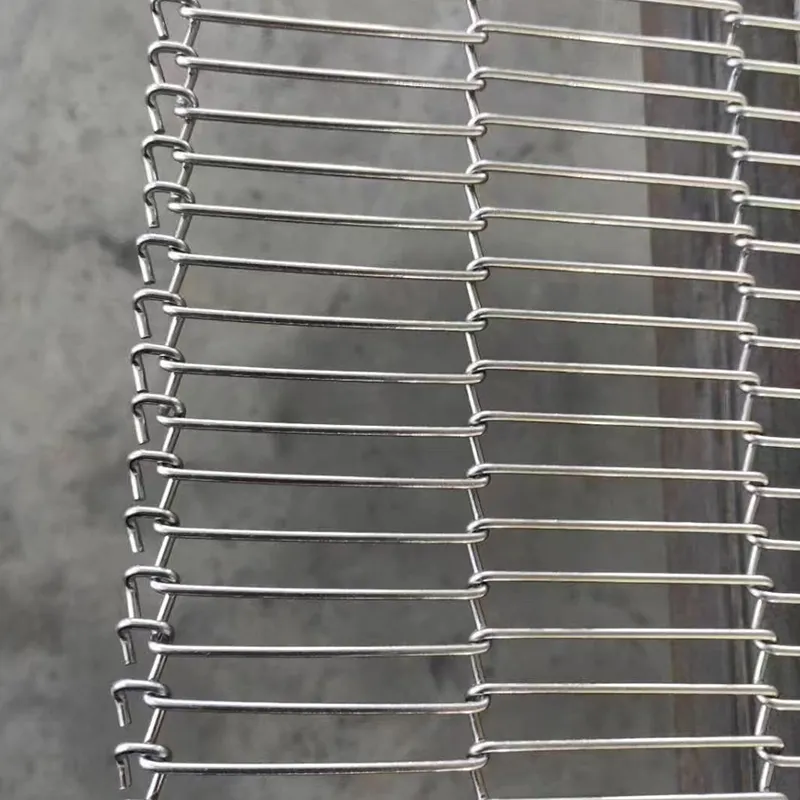
2.Open area: For wash-down applications, choose belts with 21-36% open area—water and cleaning solutions pass through rather than pooling.
3.Weld quality: Any protruding weld slag is a bacteria trap. Insist on smooth, TIG-welded connections.
4.Quick-release mechanisms: The fastest way to clean a belt is to take it off the line. Look for designs where a single pin can be removed without tools.
Pillar 3: The Paperwork That Protects Your Career
When the auditor arrives, your word means nothing. The steel’s word, backed by a certificate, means everything.
A production manager at a Latvian seafood plant shared this hard-learned lesson: “We lost two days of production because we couldn’t prove our new belts met EU food contact standards. The supplier’s ‘assurances’ weren’t enough.”
Demand these certifications before purchasing:
| Certification | What It Covers | Why It Matters |
| FDA 21 CFR 177.1550 | Food contact safety (US standard) | Required for exports to North America |
| EU Regulation (EC) No 1935/2004 | Food contact materials (European standard) | Mandatory for European market entry |
| EHEDG Certification | Hygienic design principles | Proves the belt has no bacteria traps |
| Mill Test Certificate (MTC) | Chemical composition of the metal | Verifies actual 316L molybdenum content |
Pillar 4: Maintenance Reality—What Works on Paper vs. What Works on the Floor
Here’s a truth that rarely appears in product literature: the best belt in the world will fail if your cleaning crew can’t maintain it properly.
An Australian poultry processor learned this when their new “easy-clean” belts started showing corrosion after six months. Investigation revealed the cleaning crew was using wire brushes, which embedded carbon steel particles into the stainless surface, causing rust.
Practical maintenance guidelines that actually work:
DO:
1. Use cleaning agents appropriate for stainless steel (pH 6-8 neutral cleaners for daily use)
2.Follow a CIP (Clean-in-Place) protocol: pre-rinse → alkaline wash → intermediate rinse → acid rinse → sanitize → final rinse
3. Train staff on proper cleaning tools (plastic brushes only)
DON’T:
1. Use wire brushes or steel wool on stainless steel surfaces
2.Assume “more aggressive” cleaning means better results
3. Skip the weekly belt tension check (overtight belts wear faster and create stress points)
Decision Matrix: Which Belt for Your Line?
Based on applications we’ve supported across Spain, Latvia, and Australia, here’s a practical selection guide:
| Your Application | Recommended Material | Why | ||
| Poultry/Meat Processing (Brine/Chiller) | 316L Stainless Steel, open mesh design | Salt resistance + drainage | ||
| Bakery (Oven & Cooling) | 304 Stainless Steel with PTFE coating | Prevents dough sticking, handles oven temps | ||
|
316L Stainless Steel, solid top or small mesh | Maximum protection against humid, salty air | ||
| Fruit/Vegetable Washing | 304 Stainless Steel, high open area | Allows water flow for cleaning and drying | ||
| Confectionery (Chocolate/Candy) | 304 Stainless Steel with mirror polish | Prevents sticking, easy wipe-down | ||
| High-Temp Oven (>400°C) | 310S Stainless Steel with ceramic coating | Withstands extreme heat without oxidation |
What We’ve Learned From Food Processors Across Three Markets
After supplying metal conveyor belts to Spain, Latvia, and now Australia, we’ve noticed a pattern: the most successful operations don’t buy on price alone.
They ask better questions:
1.”Show me the Mill Test Certificate for your 316L.”
2.”What’s the surface finish Ra value?”
3.”Can your team review our cleaning protocol and suggest improvements?”
4.” Who else in my industry uses your belts, and can I talk to them?”
These questions reveal what really matters: reliability, compliance, and partnership—not just a transaction.
Frequently Asked Questions
Q: How often should we replace food-grade conveyor belts?
A: With proper selection and maintenance, quality stainless steel belts typically last 3-5 years in continuous food processing environments. Regular inspection (monthly for coating integrity, quarterly for corrosion signs) helps identify replacement needs before failure occurs.
Q: Can we repair damaged PTFE coatings?
A: Yes—localized coating damage can be repaired with food-grade PTFE repair sprays or touch-up kits. However, if damage exceeds 20% of the surface area, replacement is more cost-effective than repair.
Q: What’s the biggest mistake food processors make when selecting belts?
A: Assuming “stainless steel” is a single material. We regularly see 304 specified for salt-heavy applications—leading to premature pitting corrosion within 12-18 months. The upfront savings on 304 disappear quickly when replacement costs are factored in.
The Bottom Line
Finding an easy-to-clean, corrosion-resistant conveyor belt isn’t complicated—but it requires looking beyond the surface.
Material matters. Choose 316L for salt environments, 304 for general use, and add coatings where sticking is a problem.
Design determines cleanability. Smooth surfaces, open weaves for drainage, and quick-release mechanisms separate good belts from great ones.
Paperwork protects your career. Certifications aren’t bureaucracy—they’re evidence when auditors ask tough questions.
Maintenance makes it last. Even the best belt requires proper cleaning tools and protocols.
At Hightop, we’ve supplied high-quality metal conveyor belts to food processors across Spain, Latvia, and beyond. We understand the rigorous standards of the European market and are ready to help you find the right solution for your Australian facility.
Questions about your specific application? Contact our team for a technical consultation.
Request a quote